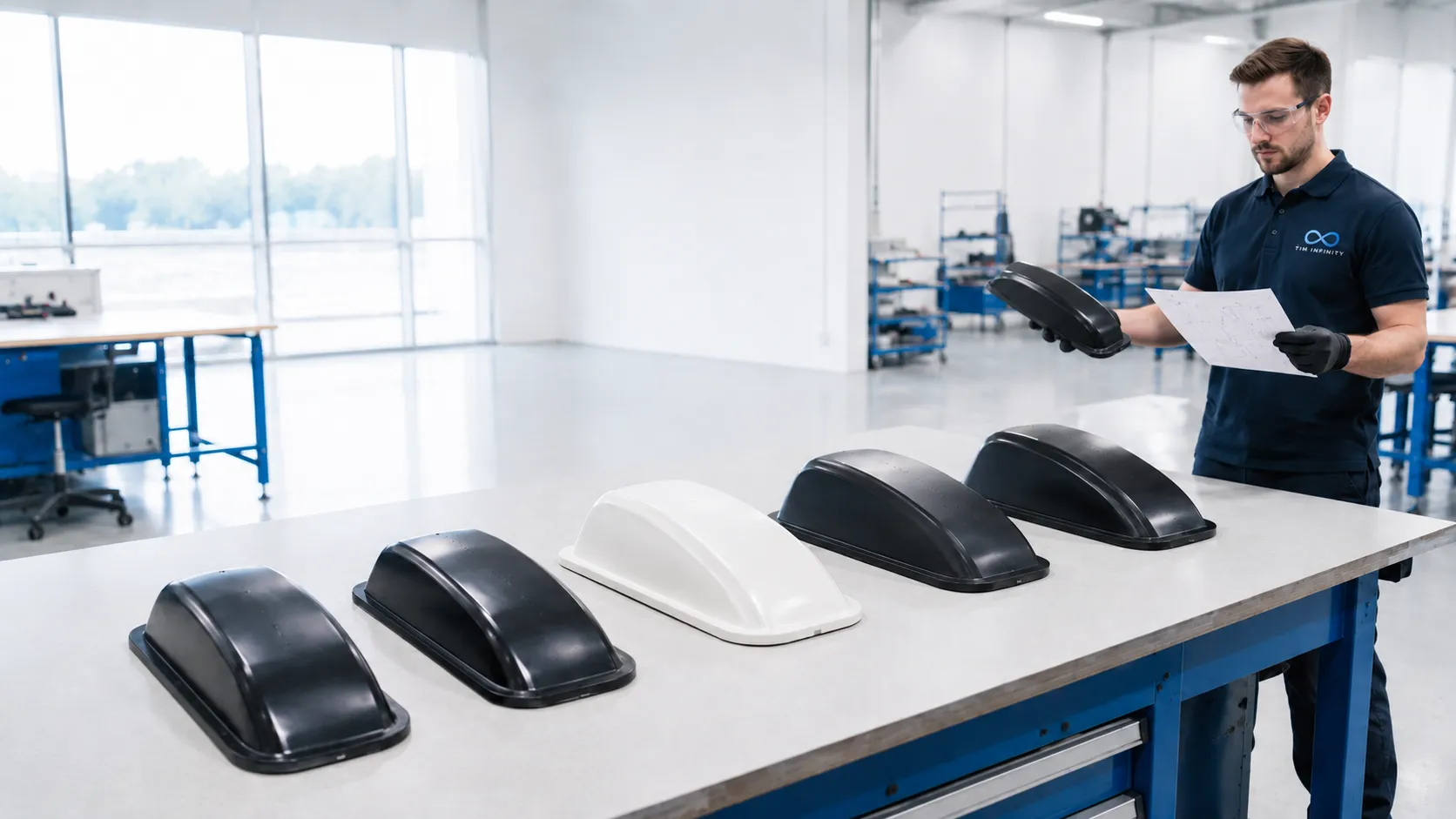
Custom plastic parts and products manufactured to order from a technical drawing, digital 3D model, physical sample or defined requirement. TIM Infinity develops and manufactures new, application-specific and replacement plastic parts according to the required geometry, function and quantity.
Custom plastic parts from a drawing, 3D model or sample
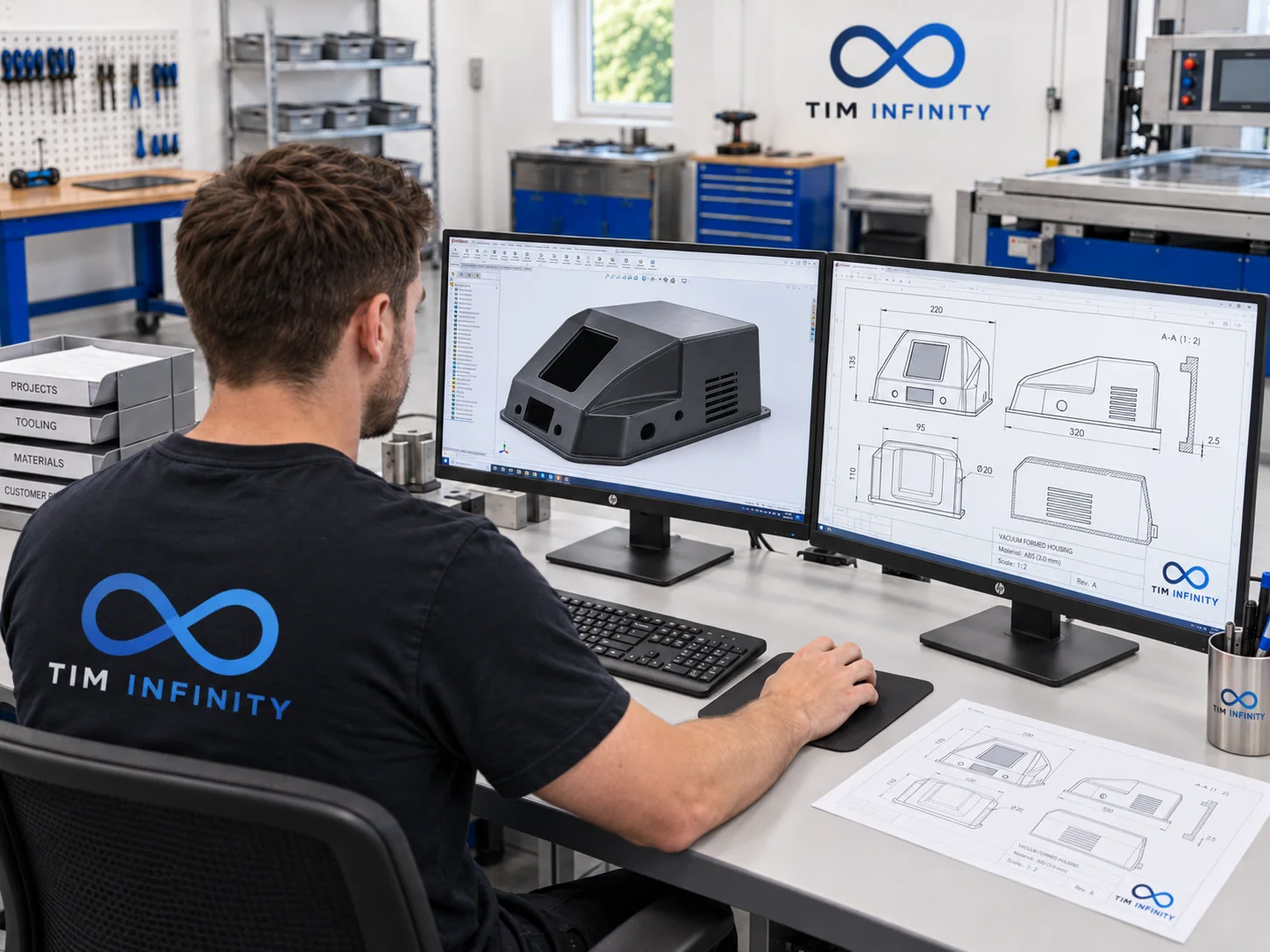
A project can begin with a technical drawing, digital 3D model, physical sample of an existing part or a defined requirement for a new product. The available starting information determines the next development and manufacturing steps.
01
From a technical drawing or 3D model
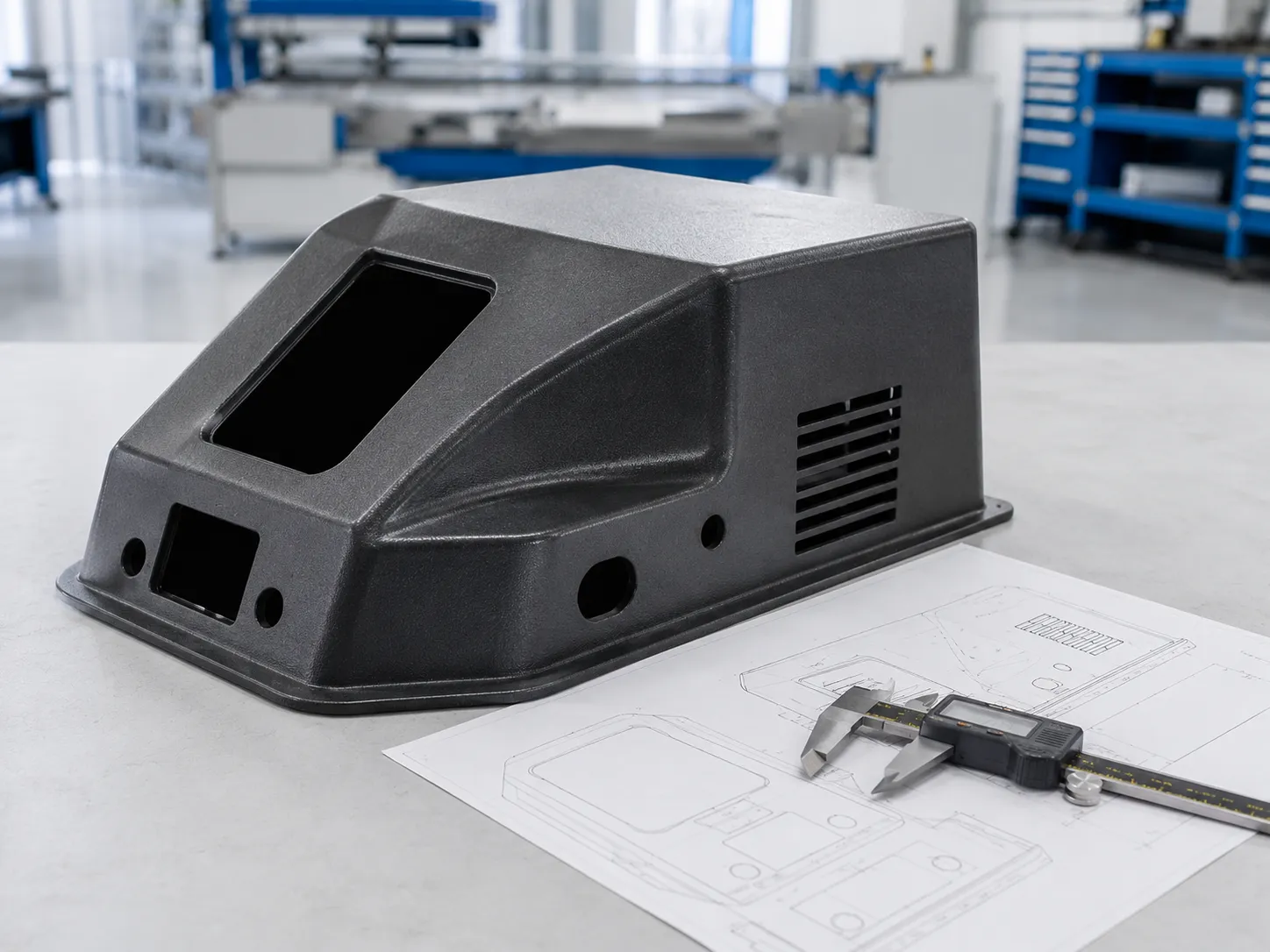
Where a technical drawing or digital 3D model is available, the starting geometry of the part is already defined. The documentation is reviewed to check dimensions, radii, openings, fitting points and other requirements relevant to manufacturing the plastic part.
02
From a physical sample or existing part
If technical documentation is not available, a physical sample or existing part can be used as the starting point for manufacturing a new or replacement plastic part. The sample is analysed and measured to define the geometry required for further development and manufacture.
03
Development of a new plastic part from a requirement
Where no finished drawing or physical sample exists, the starting point can be a defined requirement for a new product or component. Development includes aligning geometry, function, dimensions, material and finishing with the intended use of the part and the planned quantity.
APPLICATION & PART TYPES
Plastic parts and products we manufacture
Custom manufacturing of plastic parts and products means that shape, dimensions and function are defined for the specific requirement instead of selecting a finished catalogue component. The result can be a completely new product, a component for an existing device or machine, a replacement part or another shaped plastic element adapted to a particular application.
Plastic housings, covers and protective components
Plastic housings, covers and protective components are manufactured to the geometry of the specific device, machine or product. They can protect internal components, close off a defined space or form the external surface of a product.
The part can incorporate defined openings, finished edges, fitting points and other details adapted to the structure on which it will be installed.
Fascias, cladding, panels and formed surfaces
Fascias and cladding are used where part of a device, equipment item or structure needs to be shaped or covered. They can provide protective, functional and visual functions and can define the external appearance of the product.
This group includes internal and external cladding, front and side fascias, panels, cover elements and other formed surfaces that need to follow existing geometry and fit correctly with the rest of the product.
Application-specific custom plastic parts and products
An application-specific plastic part has no predefined standard shape and does not need to exist as an off-the-shelf product. It is designed and manufactured for a specific function and installation position, based on how it will be used, the available space, dimensions and technical requirements of the product.
It can be a component of a device, a shaped protective element, part of a housing, a clear or opaque cover, a technical component or another product where a standard solution does not suit the application.
The customer does not need to know the manufacturing process in advance. It is enough to define the function of the part, basic dimensions, operating conditions and the requirements the product needs to meet.
Replacement and reproduced plastic parts
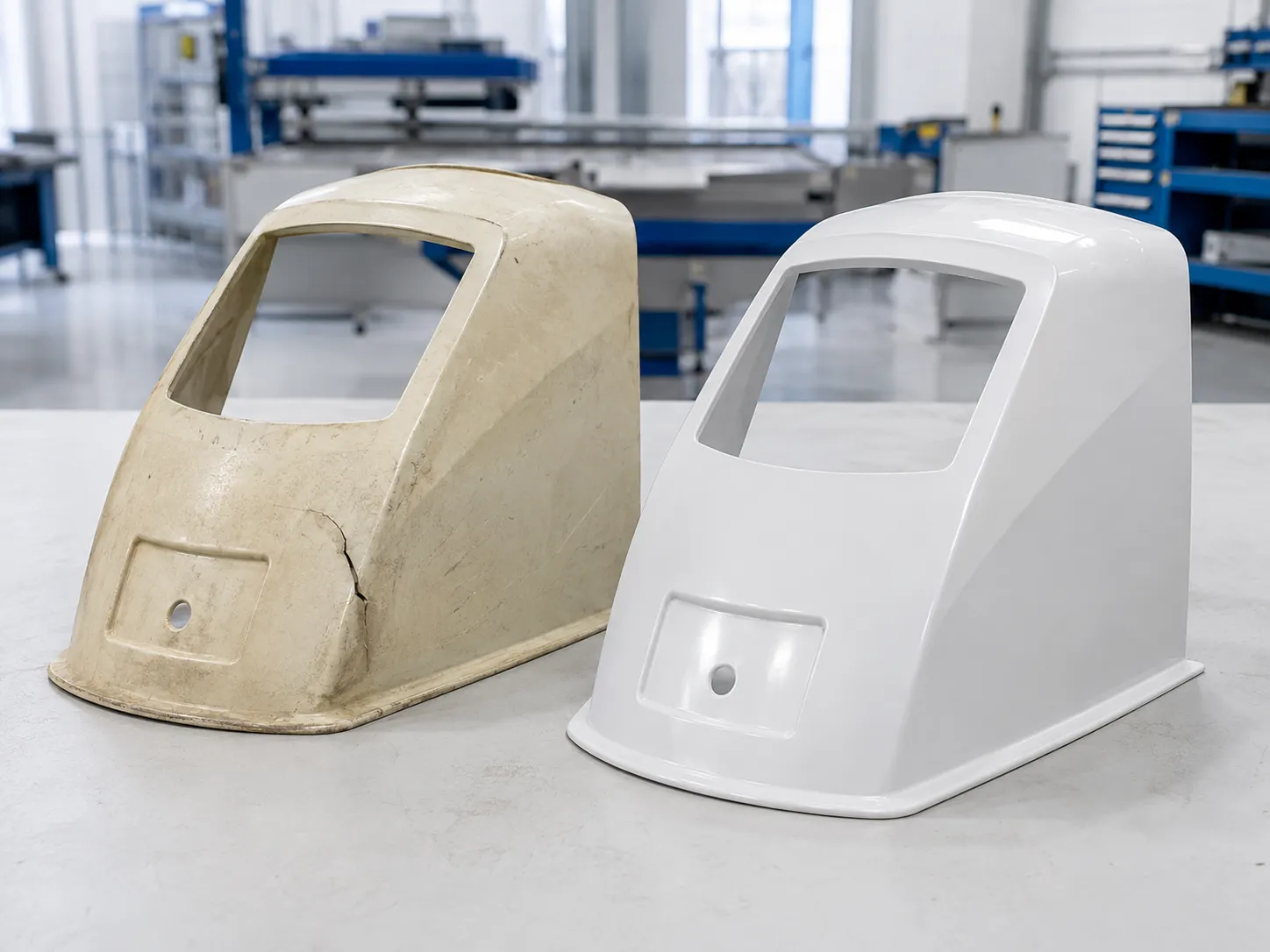
When the original plastic part is no longer available, is damaged or needs to be replaced, the existing component can be used as the starting point for developing a new part.
A physical sample can be used to analyse dimensions, shape, opening positions, fitting method and other relevant characteristics.
We then assess whether the part can be reproduced using an appropriate manufacturing process and whether any details need to be adapted so that the new version performs its function reliably. Where required, individual details can be adjusted to improve fit, manufacturability or use of the new part.
MANUFACTURING TECHNOLOGY
Custom plastic parts manufacturing
Custom plastic parts can be manufactured using different processes depending on product geometry and dimensions, material, part function and required quantity.
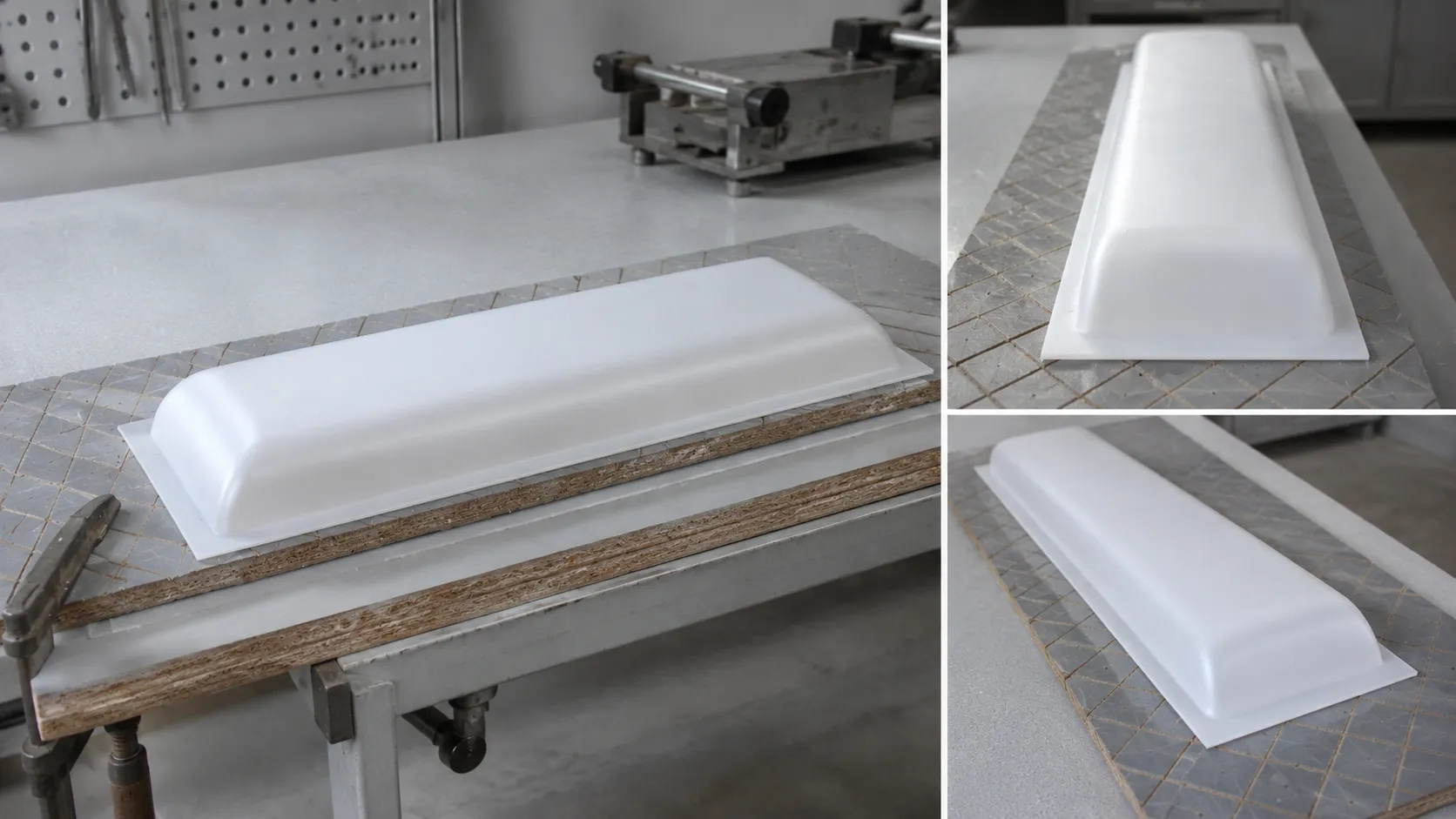
TIM Infinity specialises in manufacturing shaped plastic parts by thermoforming and vacuum forming. This process can be suitable for housings, covers, fascias, cladding, panels, transparent protective elements, plastic moulds and other products with larger formed surfaces.
Whether a specific product can be manufactured by thermoforming is assessed according to its geometry, dimensions, forming depth, material and other part requirements.
PROCESS SELECTION
Thermoforming, 3D printing or injection moulding?
The choice of manufacturing process should not begin with the name of a technology, but with the requirements of the specific product.
Thermoforming is considered for parts that can be formed from thermoplastic sheet or film and where larger formed surfaces, housings, covers, fascias or cladding are required.
3D printing is suitable for prototypes, small production runs and smaller geometrically complex parts. It enables very complex shapes to be manufactured without dedicated tooling, but printer build volume can limit larger parts. On products with large visible surfaces, layer structure and print marks often require additional finishing where a uniform visual appearance is required.
Plastic injection moulding can be advantageous for products with complex details, highly repeatable geometry and very high production volumes, but it requires a different part design approach and a different level of tooling investment.
The appropriate process is therefore selected for the actual part, not only according to the desired material or quantity.
The material used for a plastic part is selected according to the product's intended use, geometry, mechanical and visual requirements and operating conditions. Different thermoplastics are used for thermoformed parts depending on the specific product.
Depending on project requirements, materials can include PS/HIPS, ABS, PETG, PVC, PMMA, PP and PE. Material selection affects stiffness, toughness, surface appearance, transparency, formability and the behaviour of the part in service.
A project can focus on manufacturing a single plastic part, a functional prototype, a small trial run or repeat manufacturing of an already approved product. The required quantity depends on the purpose of the part, development and tooling costs, material and the requirements of the specific project.
For a new product, a prototype or first-off part can be used to check geometry, dimensions, fit and appearance before a decision is made on further manufacturing. Once the part is approved, production can be repeated in quantities suited to the project.
We do not define a universal minimum or maximum quantity — feasibility and commercial justification are assessed individually for each project.
FEASIBILITY ASSESSMENT
Feasibility assessment for a custom plastic part
Before development and manufacturing begin, we assess the part geometry and dimensions, depth and surface shape, radii and transitions, fitting method, material selection, required appearance and operating conditions.
The purpose of the assessment is to determine whether the part can be manufactured using the planned process without unnecessary design changes and whether individual details need to be adapted before tooling or prototyping.
This information is used to define realistic manufacturing options and the next project steps.
INPUT DATA
What should you provide for an initial assessment?
Complete technical documentation is not required for an initial assessment. The starting information can vary depending on whether the requirement is a new product, a part made from documentation or a replacement for an existing part.
Provides an overview of the basic geometry, dimensions, openings, radii and other defined characteristics of the part.
Physical sample of an existing part
Useful for replacement or reproduced products where the original technical documentation is not available.
Photographs and basic dimensions
Can provide sufficient starting information for an initial assessment where a drawing, model or physical sample is not yet available.
Intended use, function and operating conditions
It is important to define where and how the part will be used, the mechanical, temperature or other conditions it may be exposed to, and the functional requirements it needs to meet.
Required quantity
State whether you need a single sample, prototype, trial or small production run, or repeat manufacturing of an already defined part.
Special product requirements
Material, colour, transparency, surface appearance and texture, finishing, openings, fitting points and any other requirements relevant to the specific product.
REAL TIM INFINITY PROJECTS
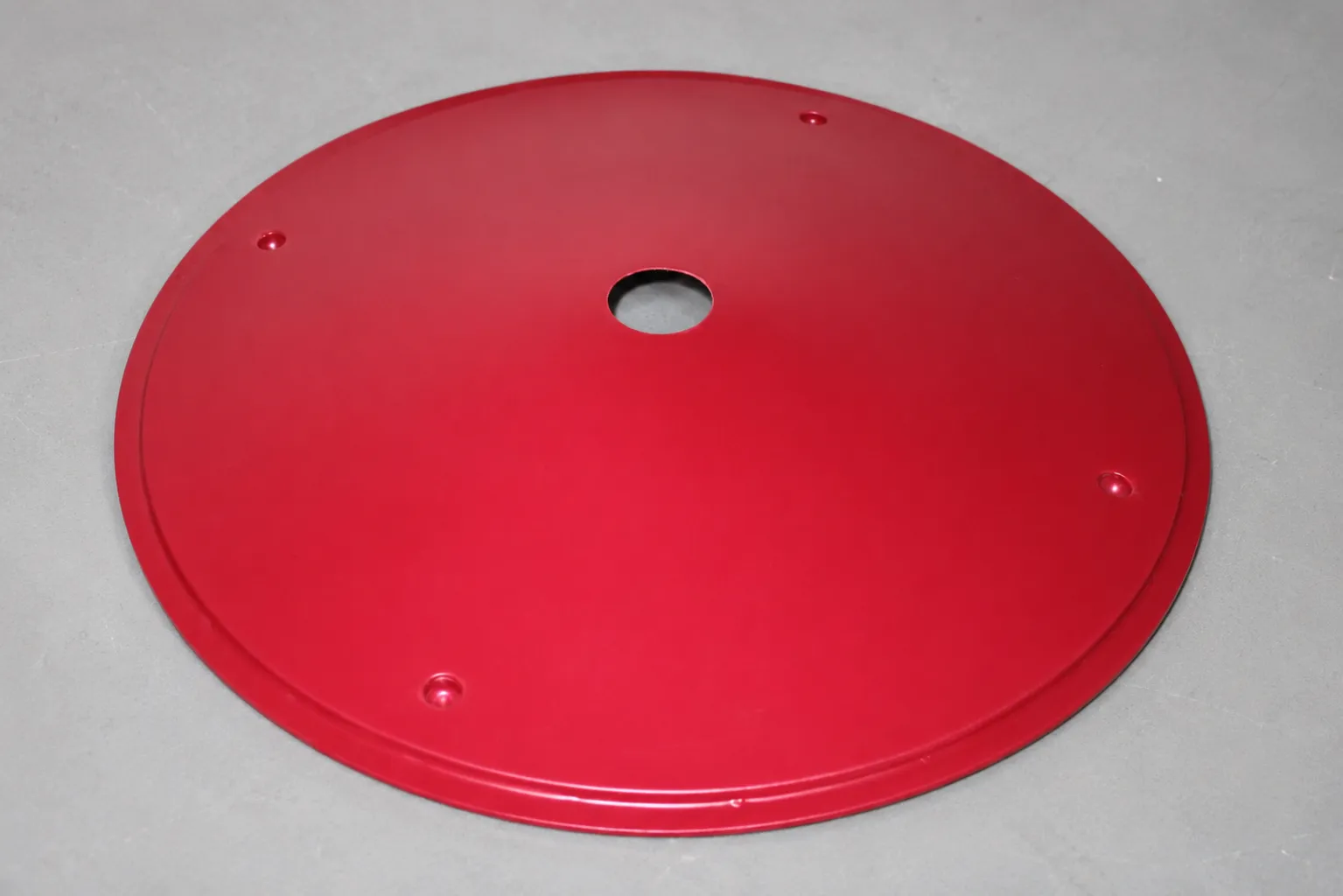
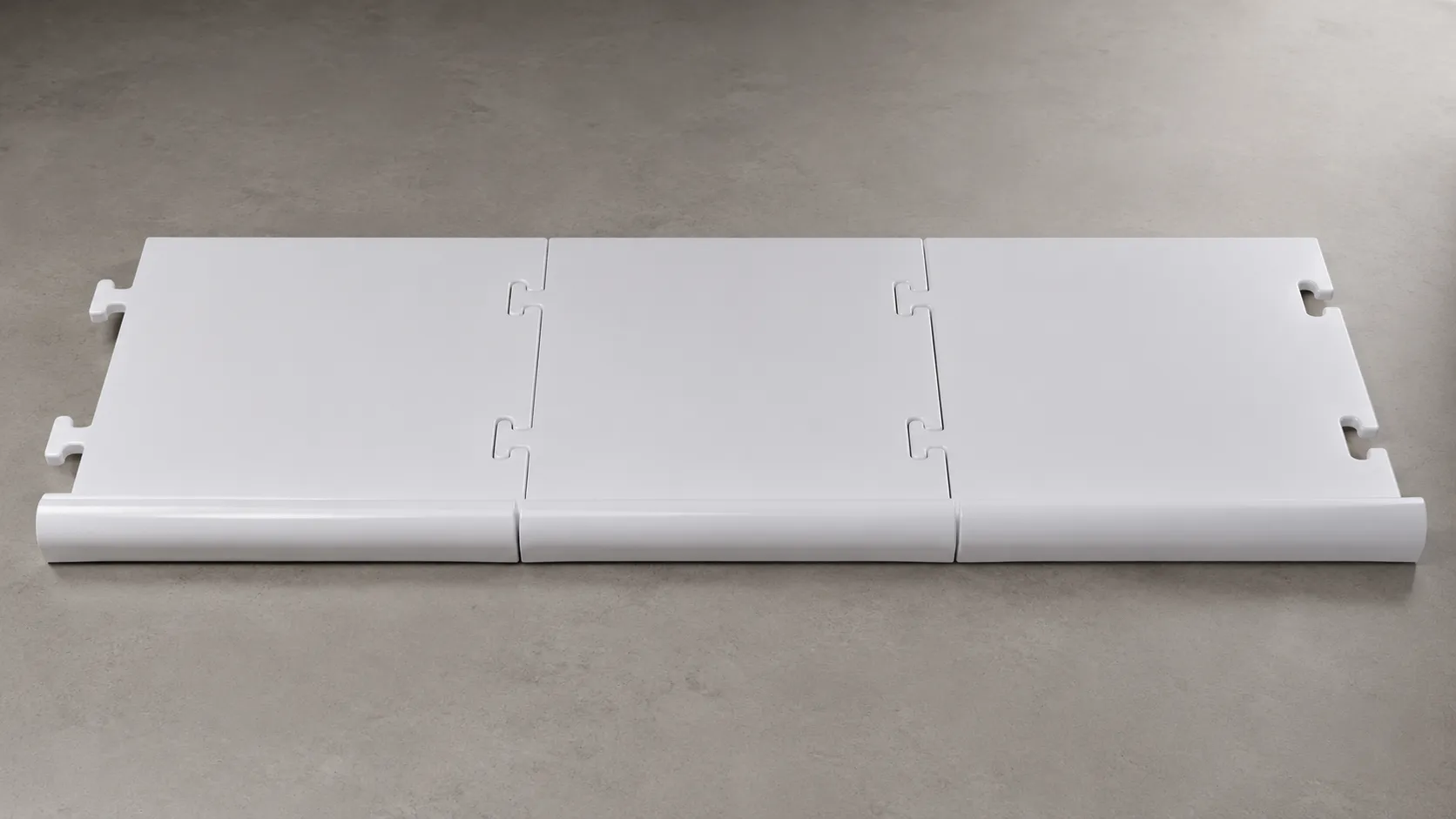
Examples of parts manufactured to a specific requirement
Yes. If technical documentation is not available, a physical sample can be used to analyse the dimensions and geometry of the part. After review, we assess manufacturing feasibility and the appropriate production process.
In many cases, an existing part can be used as the starting point for developing a replacement. Feasibility depends on its geometry, function, material and the way it needs to fit with the rest of the product.
Not necessarily. A project can begin with a technical drawing, 3D model, physical sample, photographs with basic dimensions or a clearly defined requirement.
Material is selected according to the function and geometry of the product. For thermoformed parts, suitable thermoplastic materials are selected according to the requirements of the specific project.
The choice depends on geometry, dimensions, material and required quantity. The customer does not need to select the process in advance — the product requirements are assessed first and the appropriate technology is then defined.
Yes. A project can be aimed at a one-off part, a prototype or repeat manufacturing. Feasibility and justification are assessed individually for each requirement.
SEND AN ENQUIRY
Do you need a custom plastic part?
Send a technical drawing, digital 3D model, photographs, physical sample or a basic description of the part you need. Based on the available information, we can assess manufacturing feasibility and recommend the next steps.