
TECHNOLOGY & MANUFACTURING
Thermoforming & Vacuum Forming
TIM Infinity provides complete thermoforming and vacuum forming services for custom technical plastic parts designed around the requirements of a specific product.
Depending on the project, the scope can include part development and design, tooling and mould manufacture, a prototype or first-off part, series manufacturing and finishing.
TECHNICAL CAPABILITIES
Thermoforming capabilities
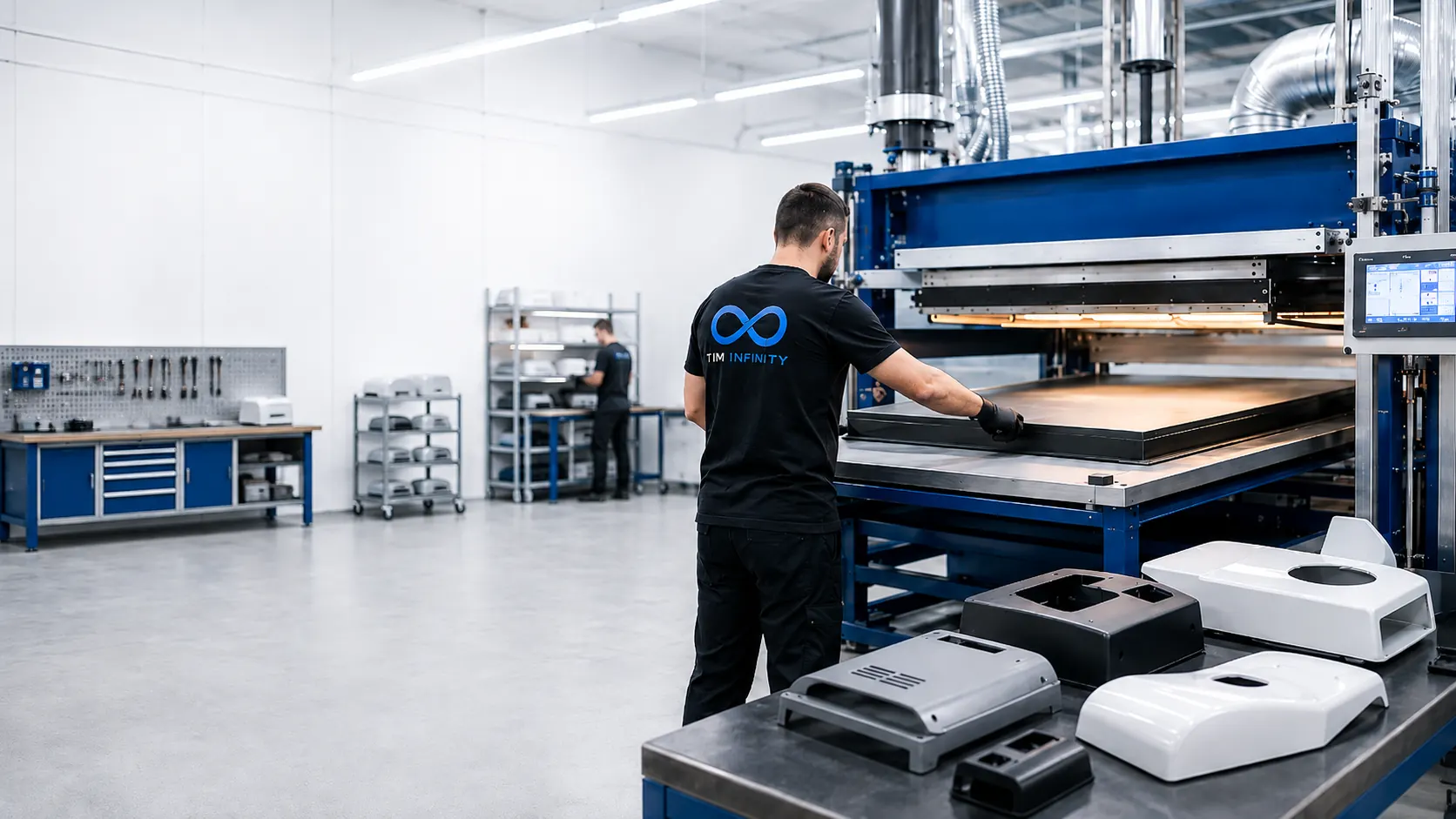
TIM Infinity operates thermoforming machines with different working formats. The maximum working area is 1650 × 800 mm and the maximum draw depth is 300 mm. The machines are set up for thermoforming thermoplastic sheet and film in a range of materials from 0.1 to 5 mm thick.
These dimensions describe the working area of the machines, not the dimensions of every finished part. Greater draw depth requires more available material and affects material distribution. Final part dimensions also depend on geometry, draft angles, radii and transitions and are therefore defined after a technical assessment.
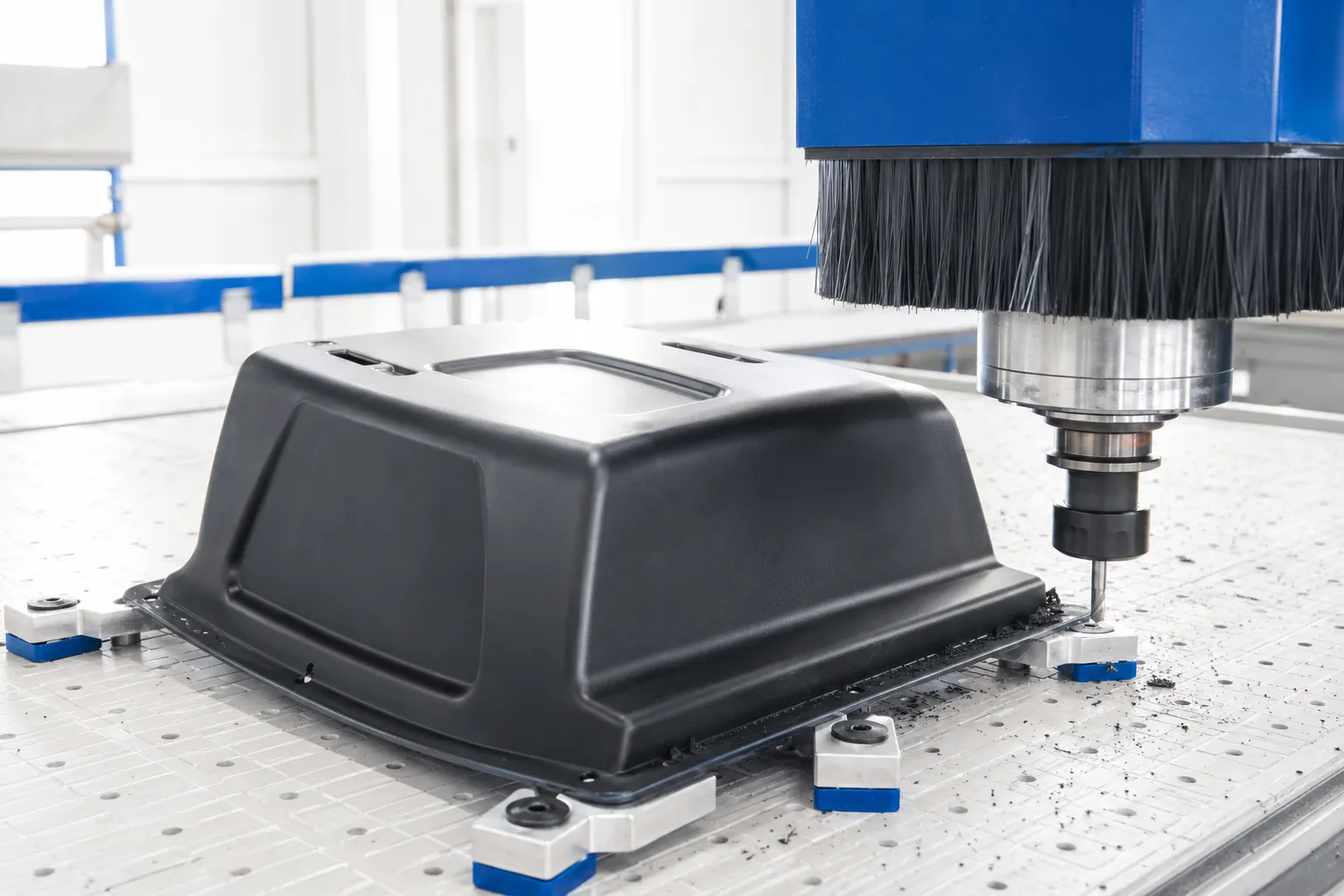
In addition to thermoforming machines, our own production resources, CNC machines and supporting equipment enable accurate straight and contoured trimming and the machining of openings in thermoformed parts. Where required, finishing can also include fitting, bonding, joining and painting.
PROCESS
The vacuum forming process
The vacuum forming process consists of controlled heating of a thermoplastic sheet or film, forming it by vacuum to the geometry of the tool, cooling and releasing the formed part, followed by trimming and finishing.
Temperature, heating time and other process parameters are adjusted to the material type and thickness, product geometry and required draw depth.
01
Loading the sheet or film
A thermoplastic sheet or film of the appropriate type and thickness is loaded and clamped into the machine frame. The material must be held correctly and the working area sealed so that vacuum can be applied in a controlled manner.
02
Controlled heating
The sheet or film is heated to a temperature at which the material can form evenly. Temperature and heating time are adjusted to the material type and thickness and to the required draw depth.
03
Vacuum forming
The heated material is brought into position over the tool and drawn onto its surface by vacuum, taking on the tool geometry. Correct material temperature and controlled vacuum application enable even and consistent forming.
04
Cooling and part release
After thermoforming, the part is cooled until the material has sufficient stability to be released from the tool. Depending on the part geometry and tool design, release can be assisted by introducing air between the tool and the thermoformed part.
05
Trimming and finishing
After thermoforming, excess material is removed, final edges are defined and any required openings or other details are produced. Further processing can include CNC or manual trimming, drilling, fitting, bonding or joining, and painting.
1 / 5
PART TYPES
Which plastic parts are suitable for thermoforming?
Thermoforming is particularly suitable for plastic parts with open geometry, suitable draft angles and radii that allow the material to form correctly and the finished part to be released from the tool.
The process can be used to manufacture housings and covers, fascias, cladding and panels, technical vacuum-formed and custom parts, transparent protective parts, advertising and illuminated elements, and plastic moulds for casting.
The feasibility of a specific part is assessed according to its dimensions, draw depth and geometry.
01
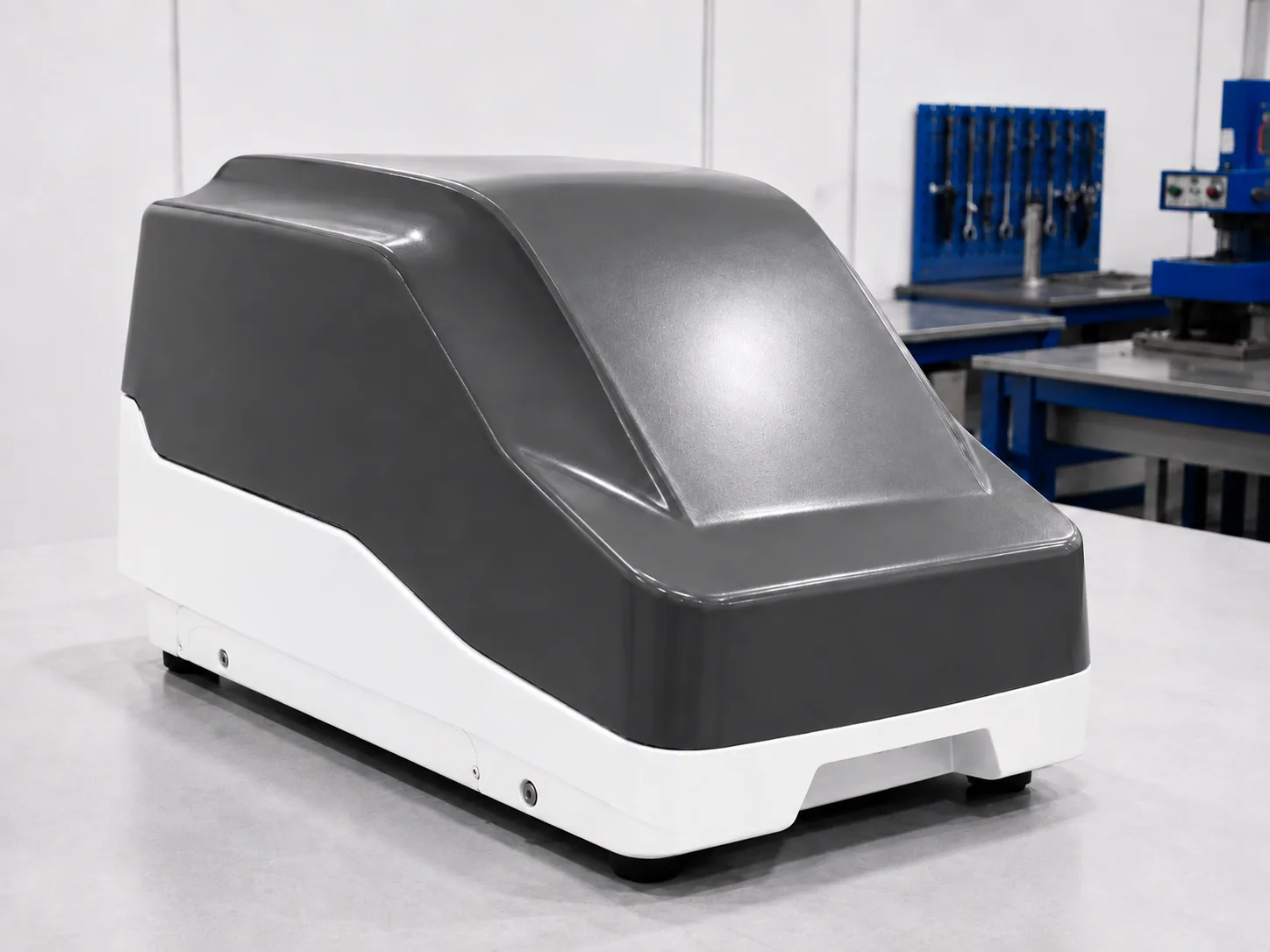
Housings and covers
Thermoforming is suitable for shaped housings and covers where a large continuous outer surface has to follow a specific product geometry. After forming, edges, openings and fitting points for other components can be accurately defined.
02
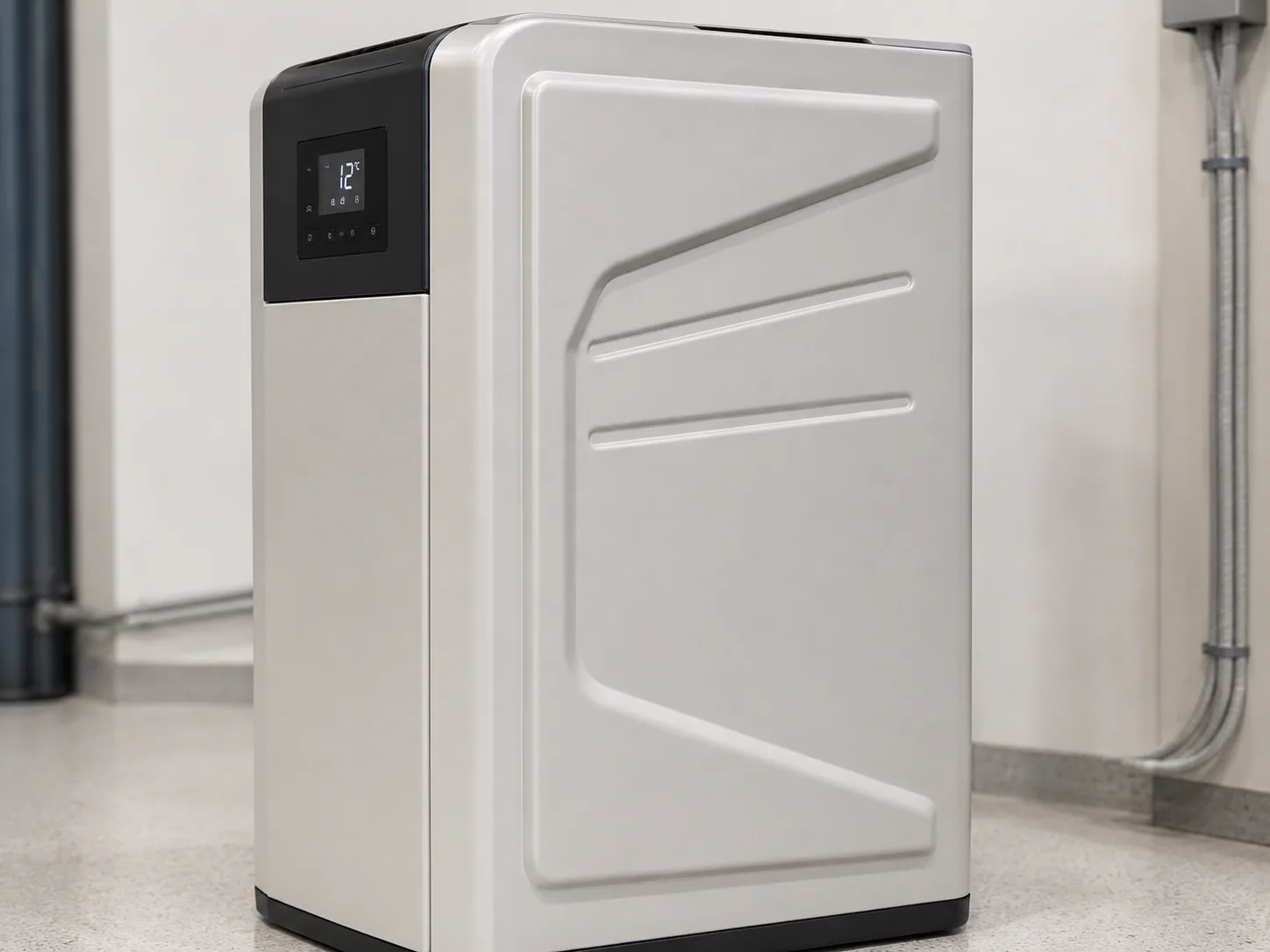
Fascias, cladding and panels
Fascias and cladding can provide protective, functional and visual functions, particularly where they need to follow the shape of a device, machine or structure. Thermoforming allows such a surface to be formed from a single sheet, with final details added during subsequent processing.
03
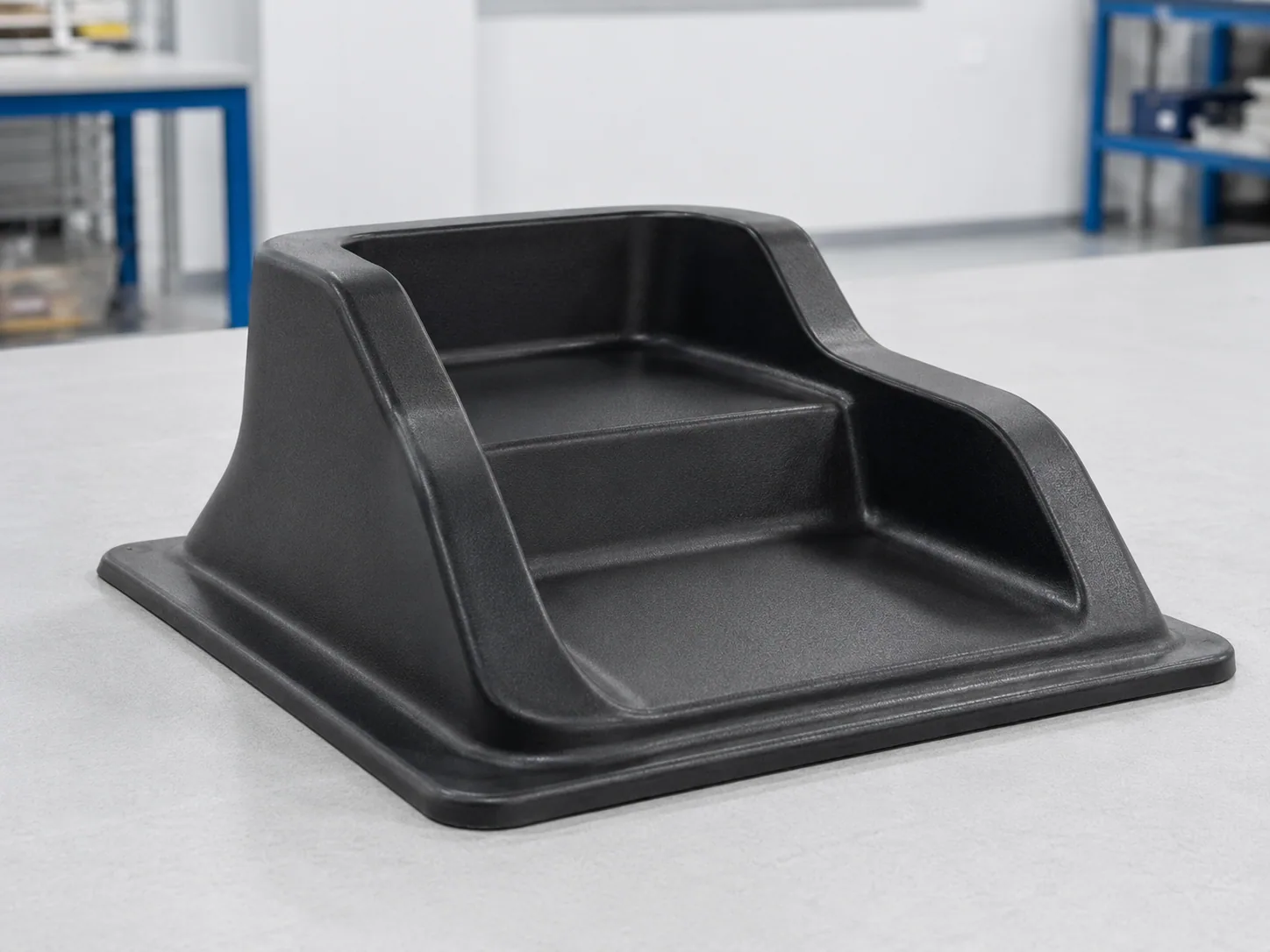
Technical vacuum-formed and custom parts
Technical vacuum-formed parts are manufactured to the requirements of a specific product and do not need to fall into a standard catalogue category. The starting point can be a technical drawing, digital 3D model, physical sample or defined requirement.
04
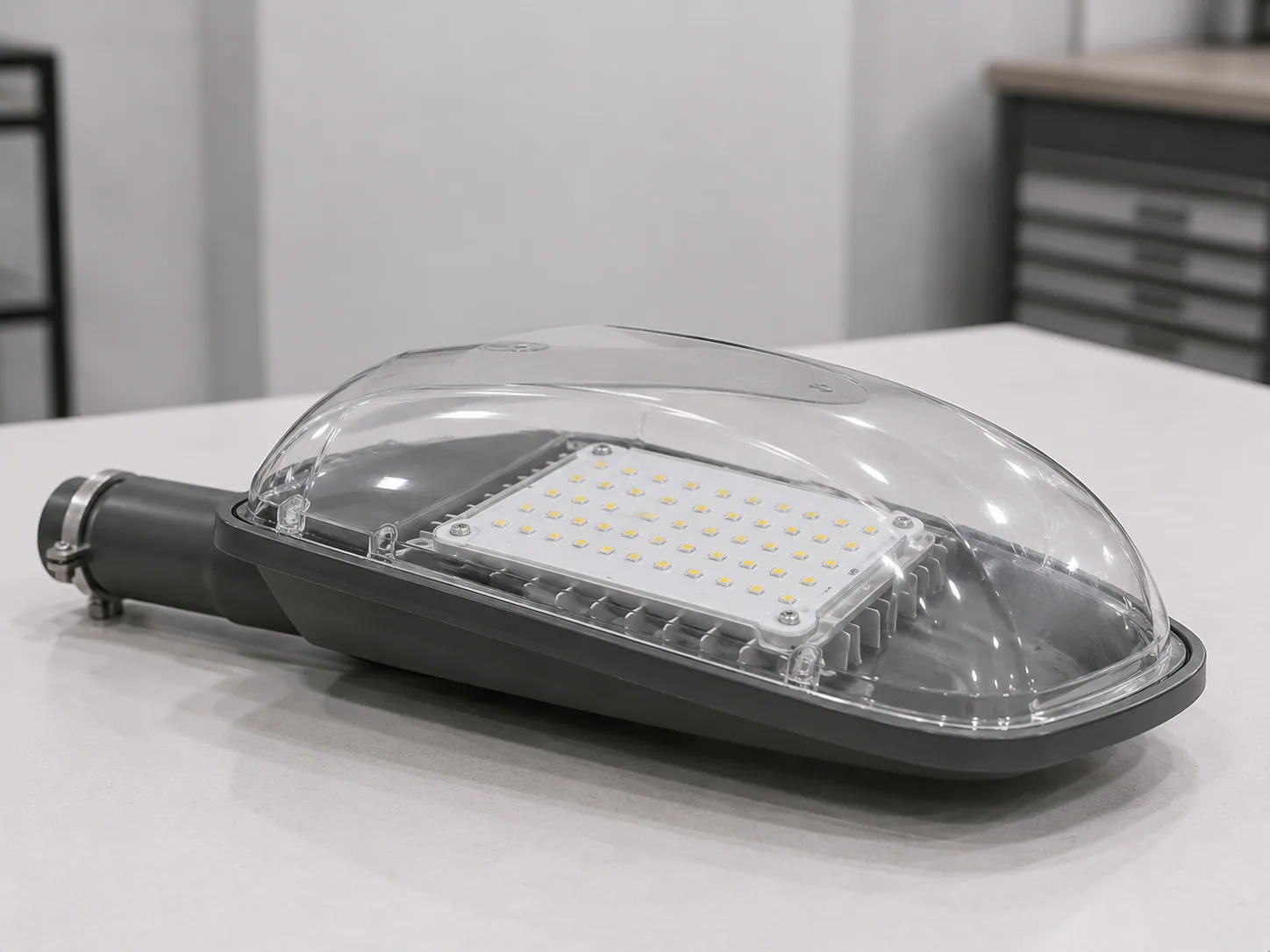
Transparent thermoformed parts
Where transparency needs to be retained, suitable transparent thermoplastic materials can be considered. Typical forms include transparent covers, protective elements and other shaped surfaces where visibility through the part must be maintained.
05
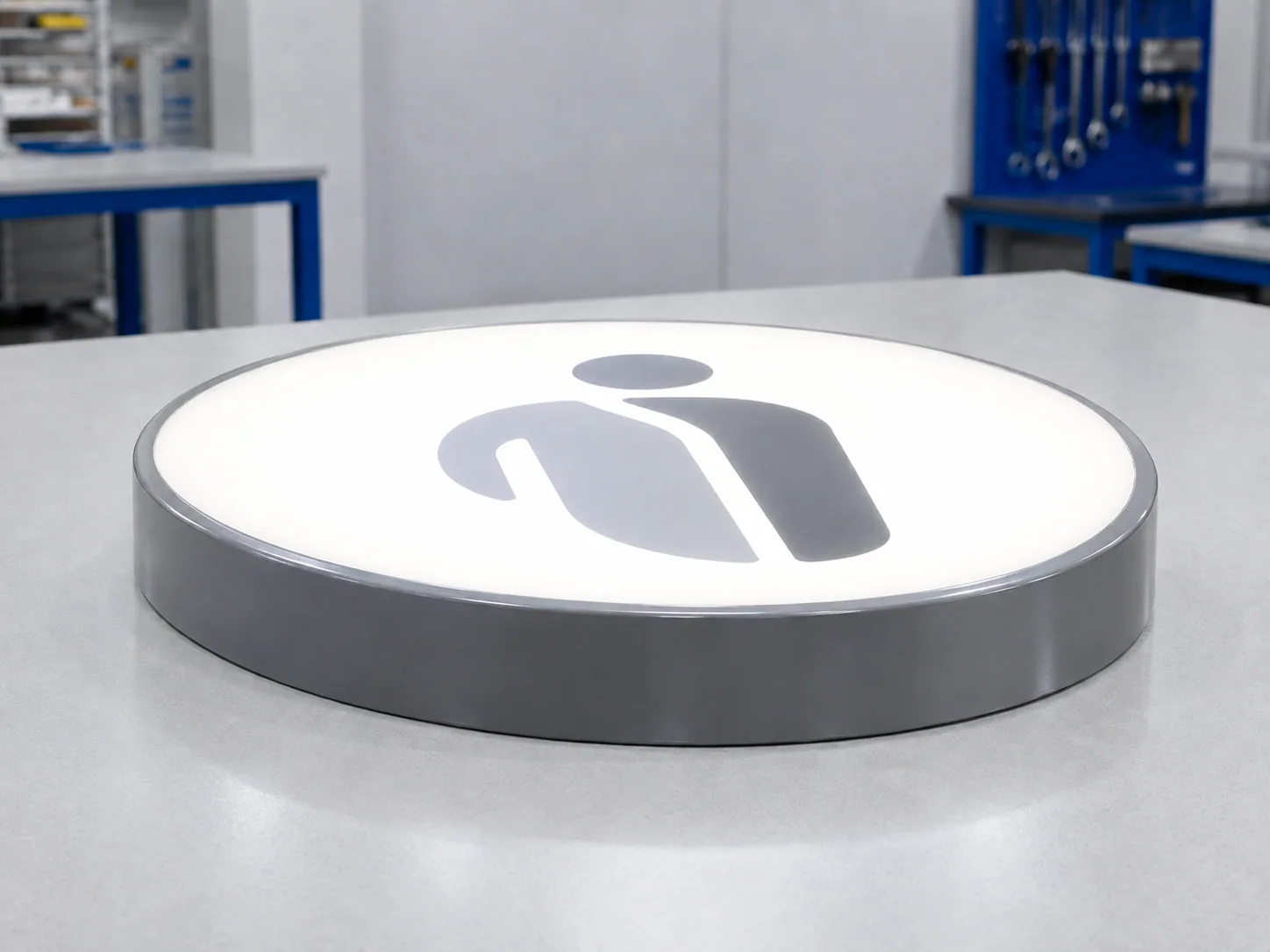
Advertising and illuminated elements
Thermoformed plastic parts can be used for illuminated signs, 3D lettering, logos, light panels and other shaped visual-communication elements. Depending on the application, the part may have a decorative or protective role or provide even transmission and diffusion of light.
06
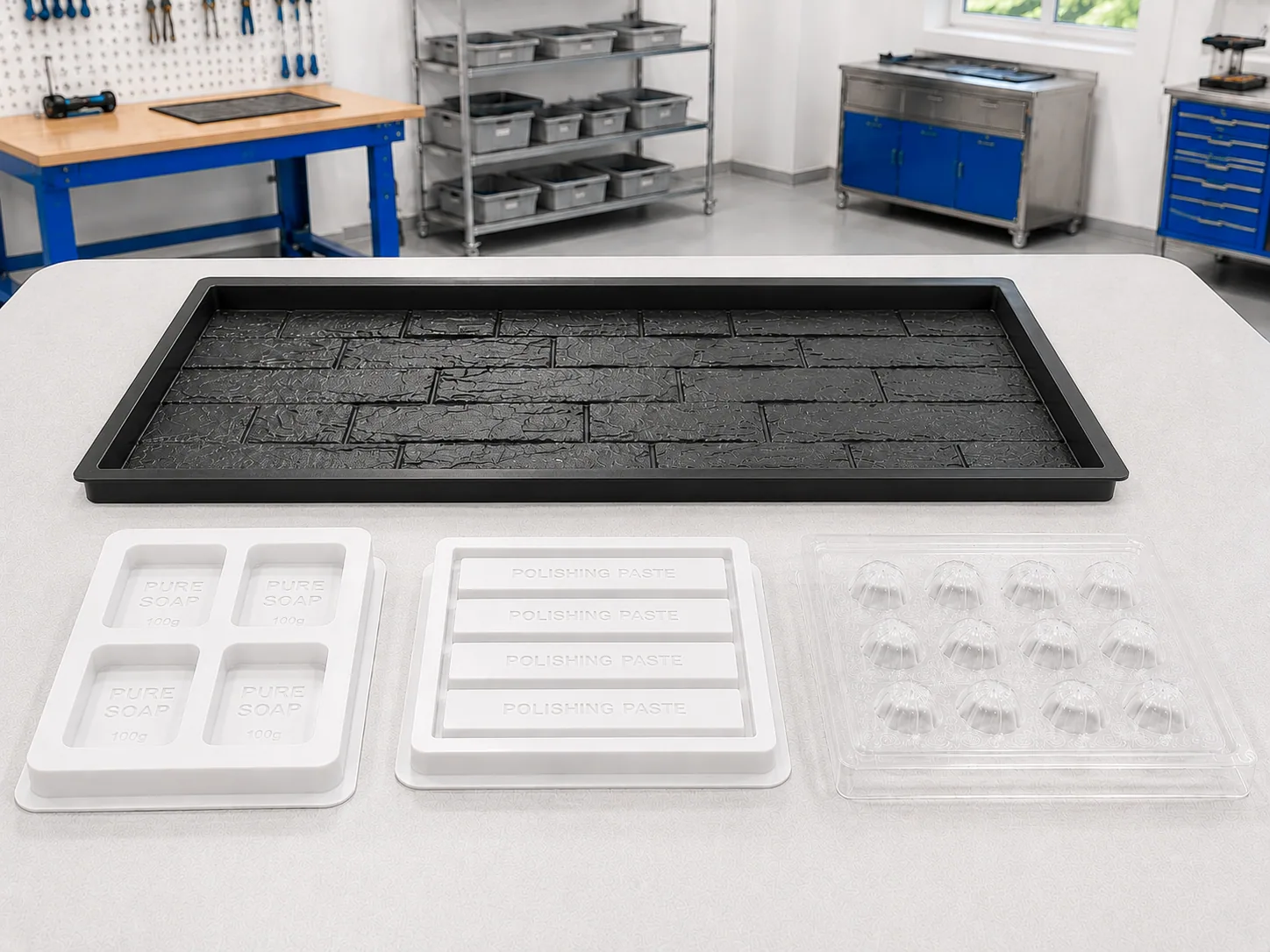
Plastic casting moulds
Thermoforming can be used to manufacture plastic moulds for casting different materials that cool or cure in the mould. With an appropriate thermoplastic, applications can include concrete, gypsum, soap, wax, confectionery products, and resin or composite materials.
APPLICATIONS
Applications of thermoformed plastic parts
Thermoformed plastic parts are used in a wide range of applications — industrial equipment and machinery, devices and appliances, transport equipment, advertising and retail elements, construction moulds and interior cladding, as well as other products requiring shaped housings, fascias, panels, transparent parts or application-specific technical components.
Typical applications can include:
- housings and protective elements for industrial equipment and machinery;
- fascias, front panels and formed panels for different devices and appliances;
- internal and external cladding for transport and vehicle equipment;
- shaped elements for advertising, retail and presentation products;
- transparent protective covers and other technical transparent components;
- plastic moulds for casting concrete and gypsum elements, wall panels, interior cladding, polishing compounds and other suitable materials.
MATERIALS
Thermoforming materials
The appropriate thermoforming material is selected according to the intended use of the product, its geometry and the technical requirements of the finished part.
Material type and initial sheet or film thickness are matched to draw depth, required stiffness or toughness, surface appearance, transparency and planned finishing.
TIM Infinity thermoforms thermoplastic film and sheet in the following materials, in thicknesses from 0.1 to 5 mm:
More about thermoforming materialsPS / HIPS
For technical parts, internal cladding, models and prototypes.
ABS
For housings, fascias and technical parts where stiffness and impact resistance are important.
PETG
For transparent parts where clarity and good formability are important.
PMMA (acrylic / acrylic glass)
For transparent and visually demanding parts where appearance and stiffness are important.
PVC
For formed products where stiffness and chemical resistance are required.
PP
Where low weight, chemical resistance and very low moisture absorption are important.
PE
For technical parts where toughness, chemical resistance and low water absorption are important.
TOOLING & MOULD MANUFACTURE
Tooling for thermoforming and vacuum forming
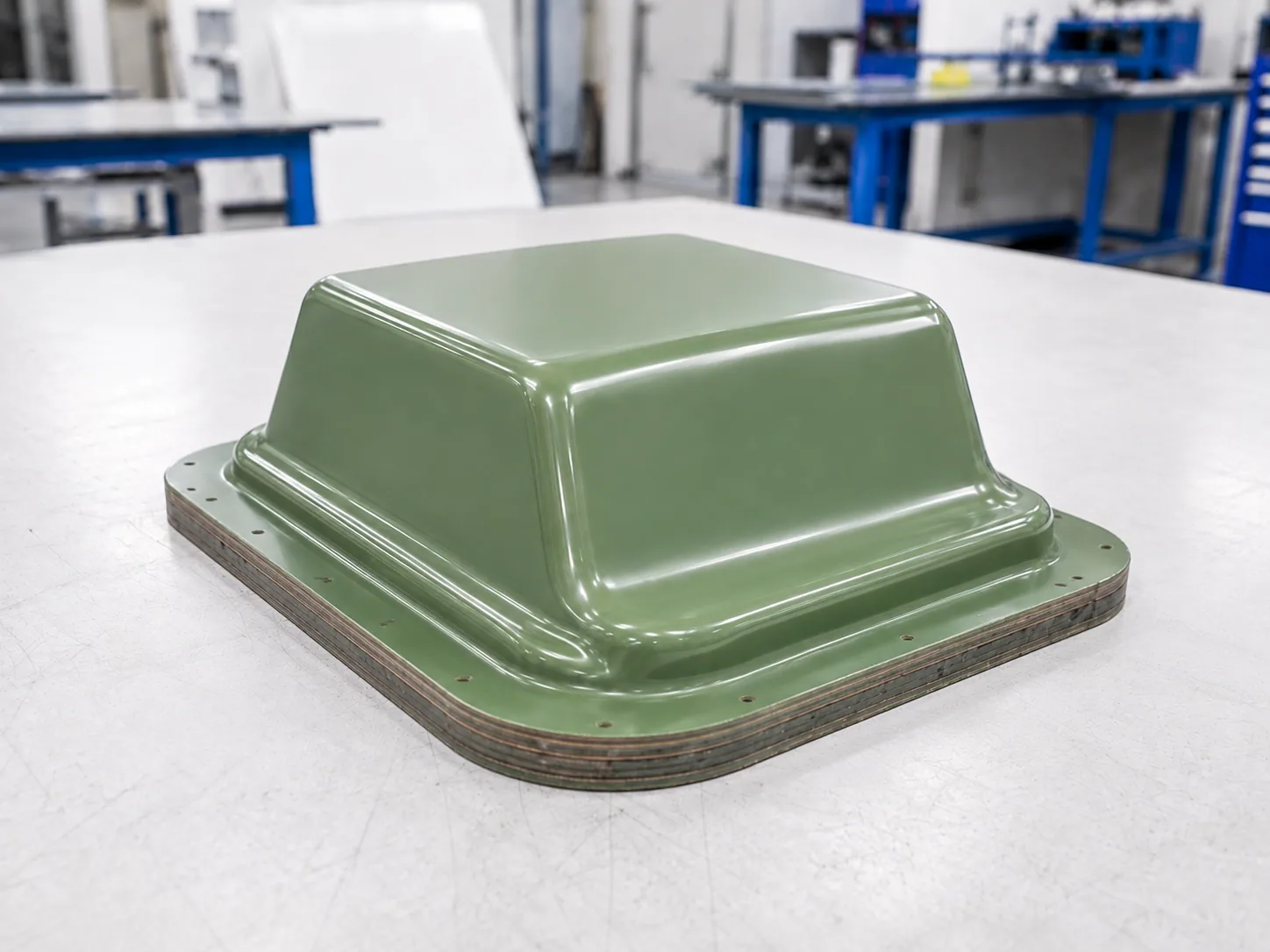
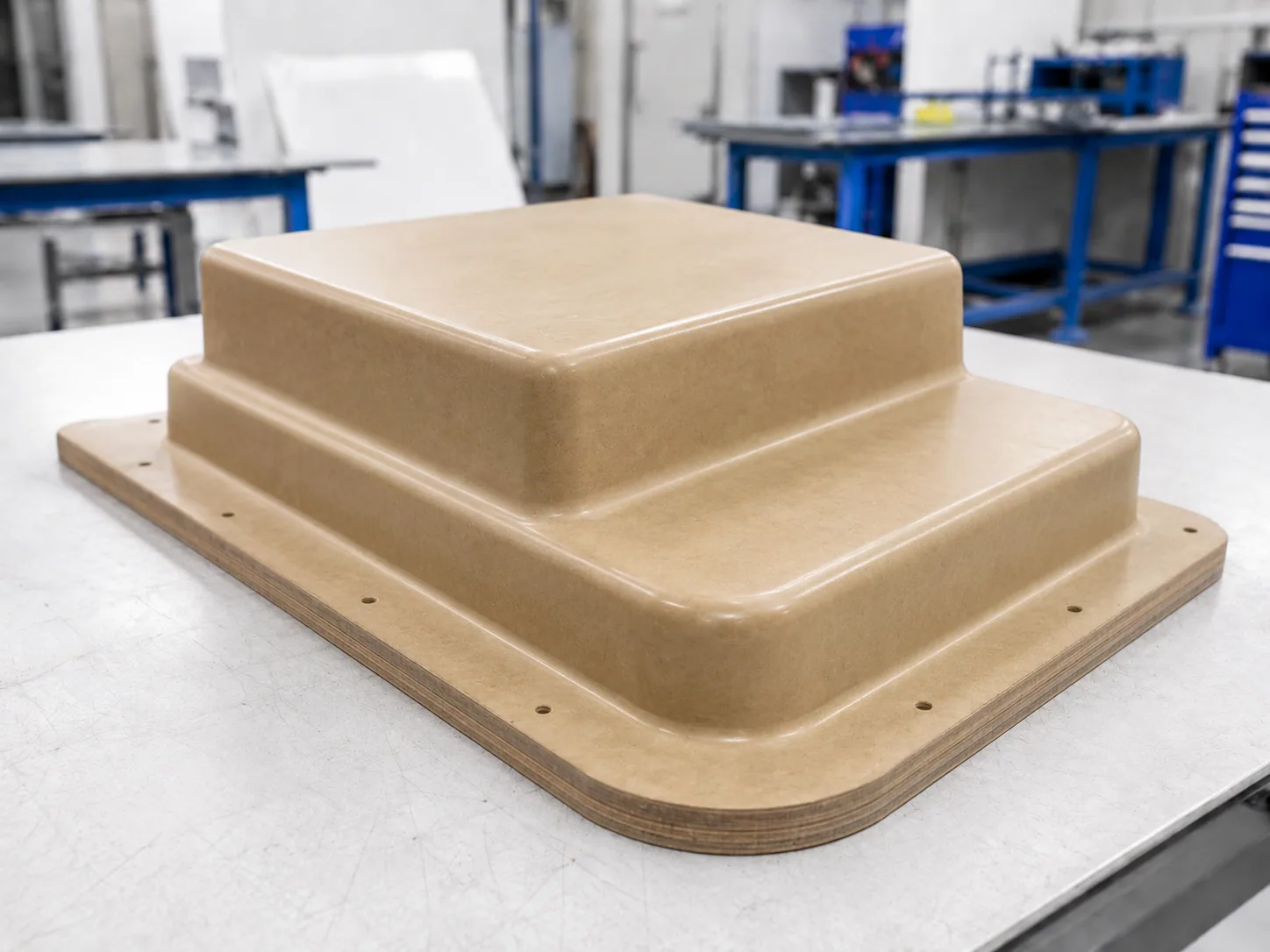
TIM Infinity designs and manufactures tooling and moulds for thermoforming according to product geometry and manufacturing requirements. The starting point can be a technical drawing, digital 3D model, physical sample or geometry developed as part of the project.
During design, radii and draft angles, draw depth, part release and the planned trimming line are defined. Tool construction and material are matched to the type of plastic, the stage of development and the planned quantity.
Depending on the requirements, tooling can be manufactured from wood, MDF, modelling board, aluminium or suitable polyester and epoxy systems.
Thermoforming tooling design and manufacture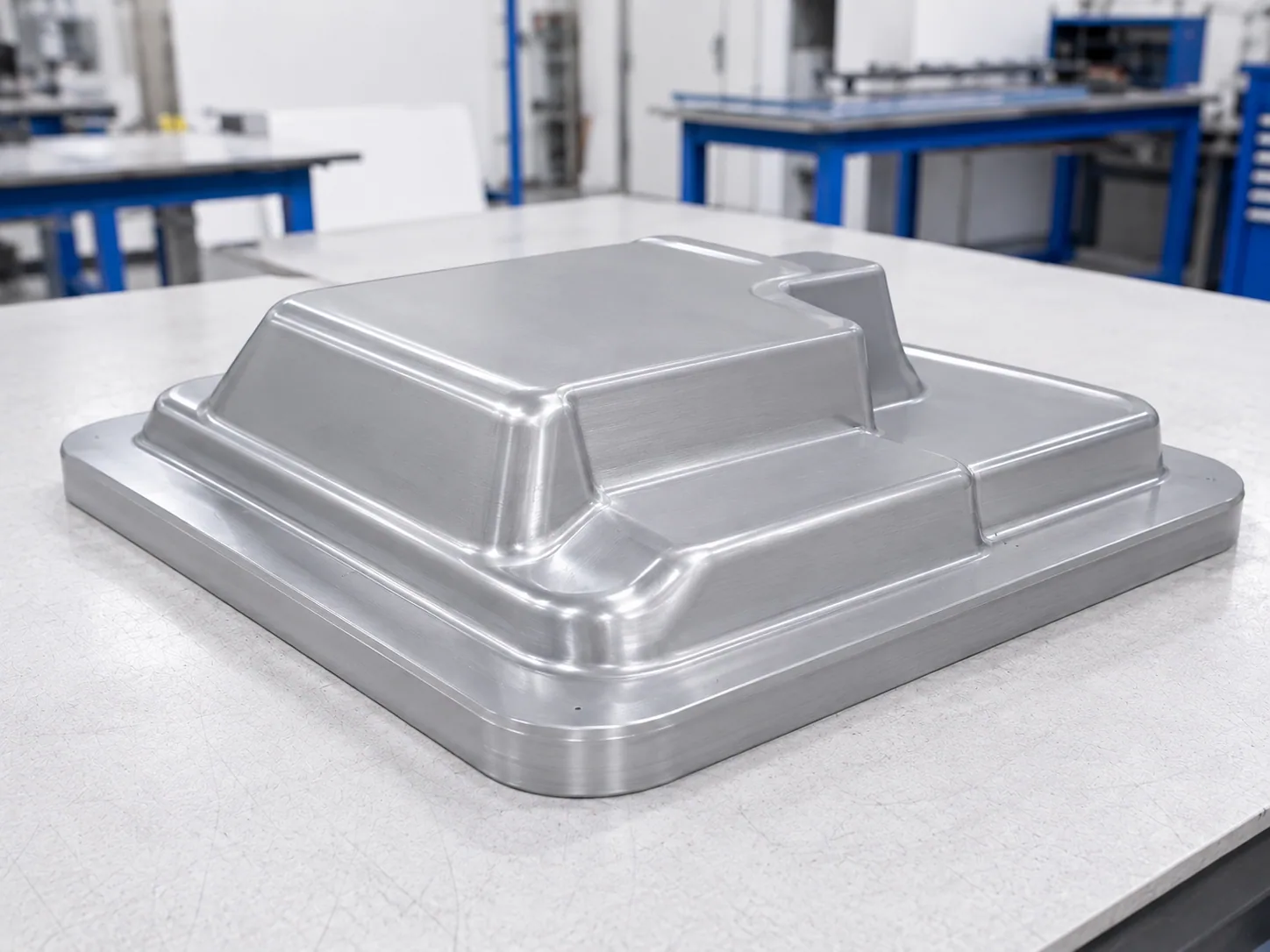
PROTOTYPE & MANUFACTURING
Prototype, one-off part or series manufacturing
A project does not have to be aimed at series manufacturing. The requirement may be a single prototype, first-off or one-off part that is itself the final project outcome.
During product development, a prototype or first-off part can also be used to check geometry, appearance, fit and other important characteristics before manufacturing continues.
Where a larger quantity is required, the project can move into repeat or series manufacturing once the part and process have been approved.
Our manufacturing has no universal predefined minimum or maximum quantity. Once our team has assessed the required steps and prepared a quotation covering development, tooling, production preparation, part manufacture and finishing, the customer decides which quantity is appropriate for the project requirements and budget. Where the project is justified for the customer, the final result may also be a single part.
Custom plastic parts from a drawing or sampleFINISHING
Finishing of thermoformed parts
Thermoforming produces the basic shape of the product. Additional processing is often required to achieve the final geometry and functional details.
TIM Infinity can provide complete finishing of thermoformed parts within the same project. With our own CNC machines, dedicated equipment and production resources, finishing can include:
- CNC trimming
- Manual trimming and cutting
- Drilling and machining of openings
- Fitting and assembly
- Bonding and joining
- Painting
The finishing method is planned together with the product and tooling geometry, because the position of edges, openings and fitting points can affect the design of the part itself.
PROCESS SELECTION
Is thermoforming the right manufacturing process for your part?
Advantages of thermoforming
For suitable geometry and planned quantities, thermoforming can allow simpler tooling development and lower initial tooling investment than more demanding processes such as plastic injection moulding.
Thermoforming tools can be simpler to manufacture and, depending on their design, more suitable for later corrections. This is particularly useful when developing a new product, where the first prototype or trial part needs to be checked and the geometry may need to be adjusted before manufacturing continues.
For suitable projects, this approach can also shorten the path from design to the first functional part without requiring immediate investment in complex tooling intended for very high production volumes.
When another process should be considered
Thermoforming is not the right process for every plastic product. For parts with complex internal geometry, details on both sides, internal features or other requirements that cannot be produced reliably by forming sheet material, injection moulding, CNC machining, 3D printing or another technology may be more appropriate.
Plastic injection moulding generally requires more complex tooling, can involve substantially higher initial investment and can require a much longer tooling lead time. It can, however, be more suitable for very high production volumes and parts with complex internal details.
3D printing is useful for prototypes and smaller, geometrically complex parts. Printer build volume can limit part size, while on larger visible surfaces the layered structure and print marks often require additional finishing to achieve uniform visual and tactile quality. In repeat manufacturing, the process can be slow and costly per part, while dimensional and surface repeatability depends on the technology, part orientation and process settings.
Combining thermoforming, 3D printing and CNC machining
For smaller production runs, a combination of manufacturing processes can be considered. A main shell or larger formed surface can be thermoformed, while smaller details or internal features can be made by 3D printing or CNC machining and subsequently joined or bonded.
This approach can make sense where injection moulding is not economically justified or the tooling lead time does not suit the project, while producing the complete part by 3D printing would be size-limited, too slow, too expensive or unable to provide the required surface appearance.
The first step is therefore a technical assessment of the product itself. Before tooling development and manufacture begin, the aim is to establish whether the geometry, material and planned manufacturing are suited to thermoforming or whether another or combined process should be considered.
REAL TIM INFINITY PROJECTS
Thermoforming projects
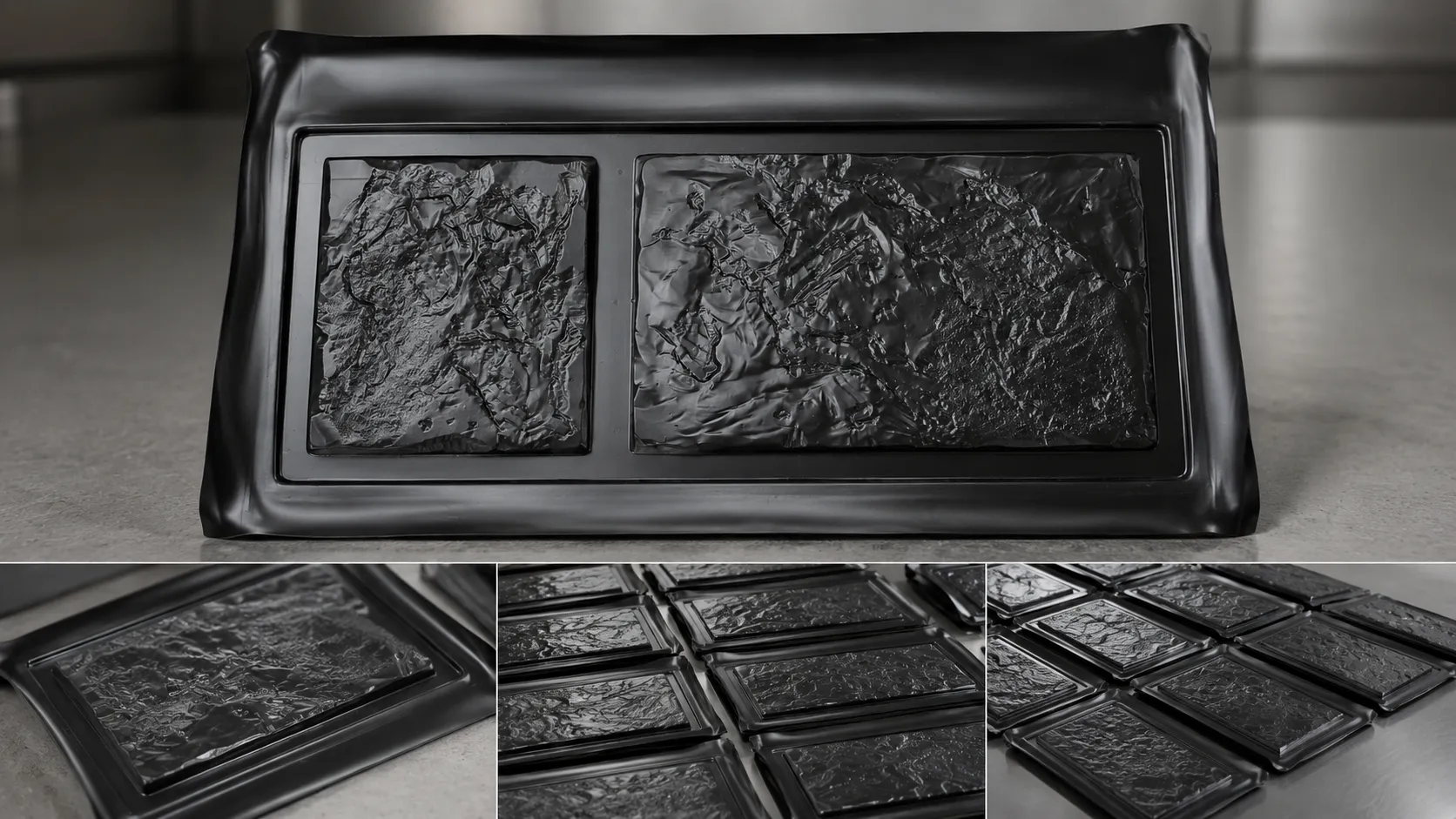
ABS 1.2 mm · MDF tool · 100 pieces
Plastic Concrete Moulds
A small production run of 100 moulds for concrete paving elements.Project details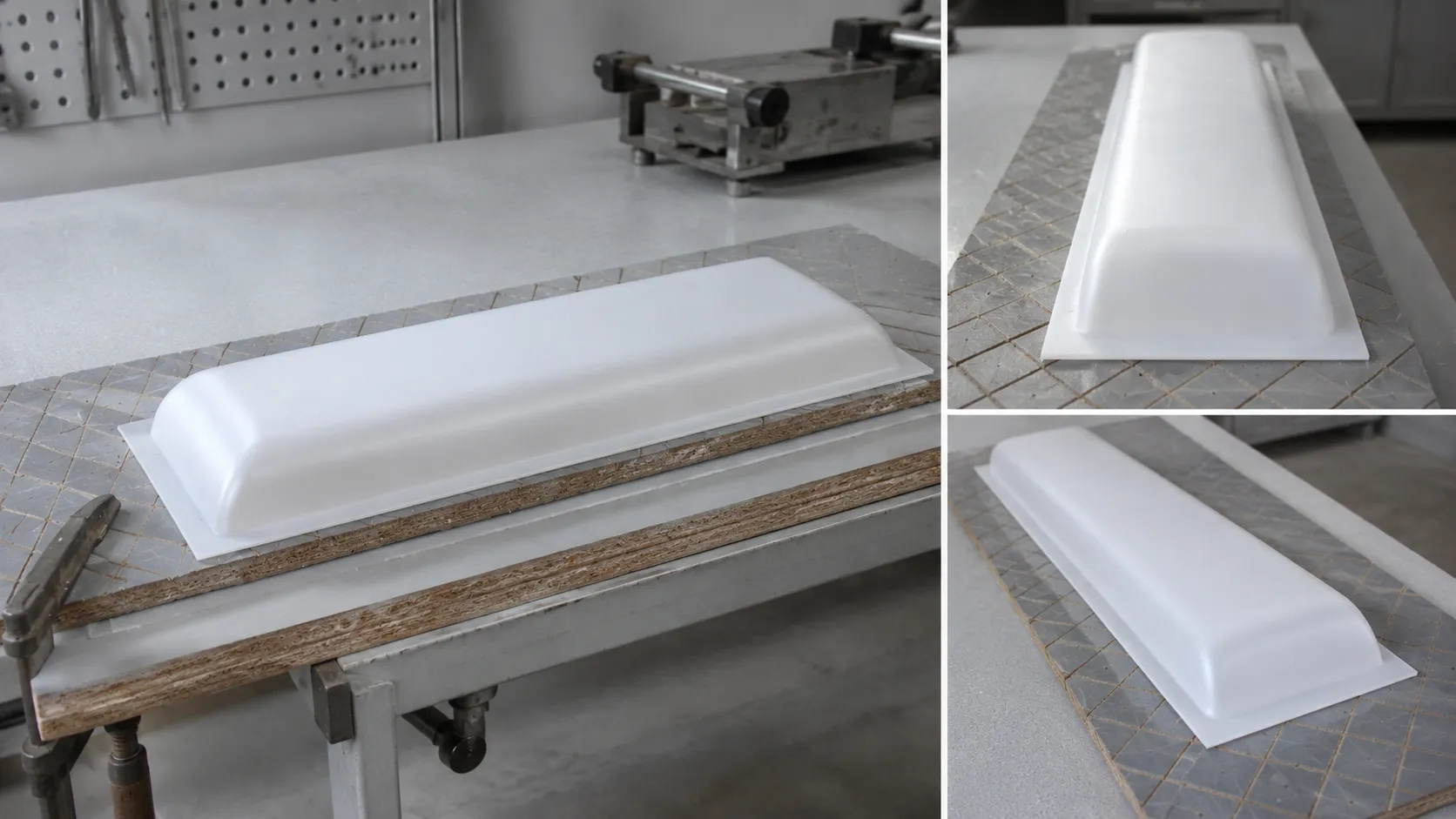
White ABS 3 mm · production run of 350 pieces
Custom ABS Enclosure
Development from a render, tooling, prototype, testing and a production run of 350 pieces.Project details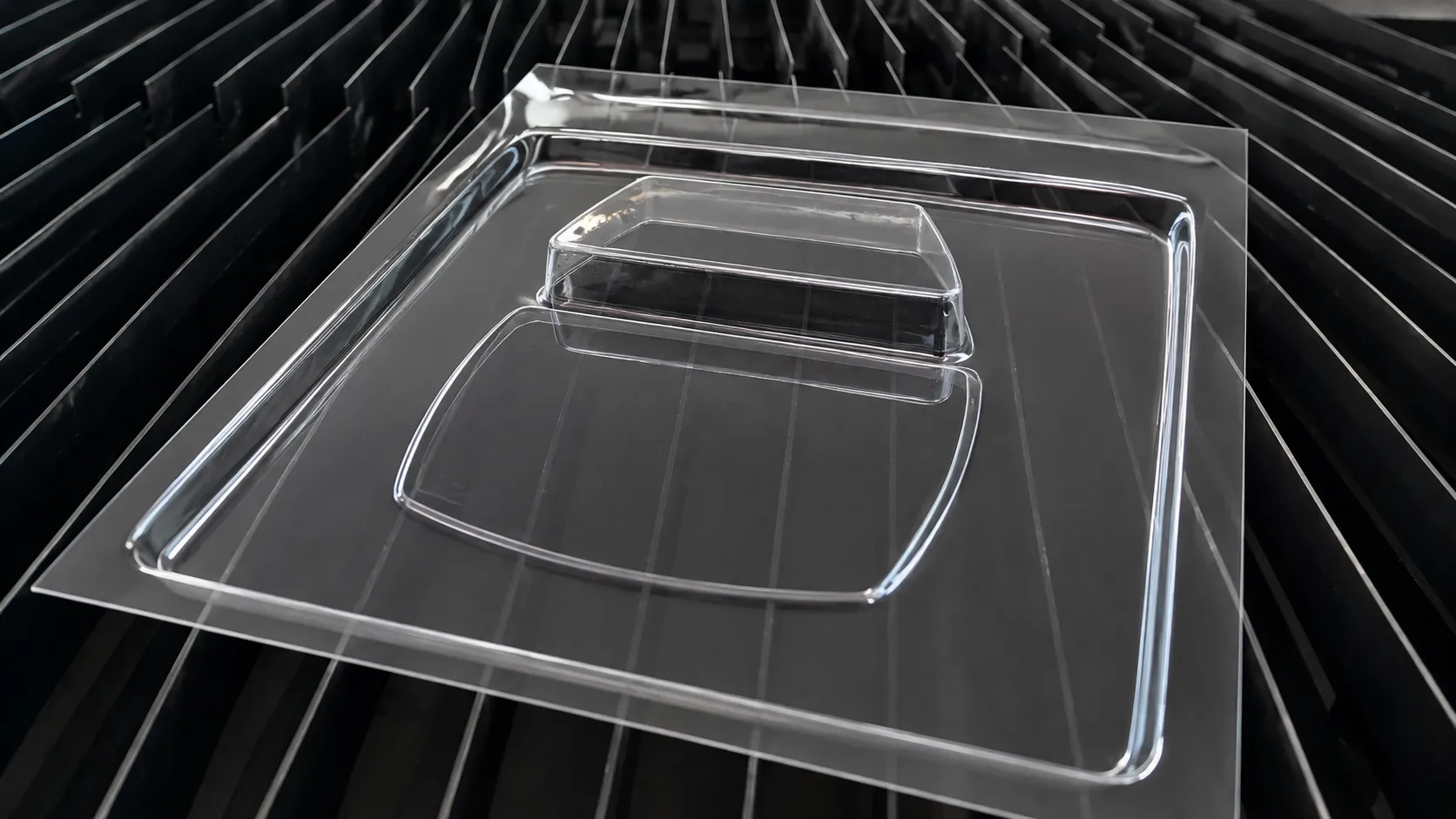
PMMA XT 3 mm · prototype + 30 pieces
PMMA Light Diffuser Cover
Extruded PMMA XT, 3 mm, epoxy-carbon tool, prototype and a pilot run of 30 pieces.Project detailsPART ASSESSMENT
Thermoforming feasibility assessment
Complete technical documentation is not required for an initial assessment. The more precise the information about the part, the more reliably manufacturing feasibility and the next project steps can be defined.
The most useful information for an initial assessment is:
- technical drawing or digital 3D model;
- physical sample of the existing part;
- photographs with basic dimensions;
- description of the product's intended use and function;
- approximate required quantity;
- material requirements.
Based on the available information, our team first assesses whether thermoforming is appropriate for the specific part geometry. We then define the required steps for development, tooling, first-off part, manufacturing and finishing and prepare a quotation with estimated project costs.
SEND AN ENQUIRY
Do you need thermoforming or vacuum forming?
Send us a technical drawing, digital 3D model, photograph, physical sample or the basic information about the part.
Based on geometry, dimensions, intended use and planned quantity, we can assess whether vacuum forming is the right process and define the next project steps.
Send an enquiry